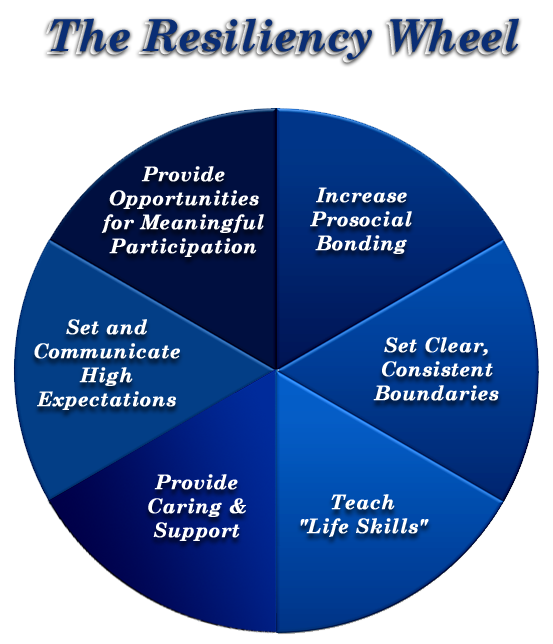
Caring and support: Listen to students’ concerns and answer their questions in direct, factual, age-appropriate ways. (Be careful of giving TOO MUCH information, especially with younger children.)
High expectations: Express your certainty that students can cope with the situation and faith in their strength and inner resources.
Opportunities for participation: Help students come up with ways they can address the crisis themselves: i.e., raising money, sending cards and letters, forming a Peace Club.
Prosocial bonding: Provide students with positive activities to do together that give them a sense of purpose and mastery in the situation.
Clear, consistent boundaries: Strike a balance between addressing concerns and getting back to a normal schedule. Young people need the safety of familiar rules and routines.
Life skills: Encourage students to communicate their thoughts and feelings. (But balance is again the key: Don’t let the talk escalate and overwhelm students).
For more information on crisis response and counseling, check out these web sites:
| SAMHSA: http://www.samhsa.gov/ (click on “crisis counseling”) | |
| U.S. Department of Education: http://www.ed.gov/ | |
| UCLA: smhp.psych.ucla.edu (select topics of “Crisis Prevention and Response, “Grief and Bereavement” or “Post-Traumatic Stress”) |


